Last Updated: October 31, 2026
Quick Summary
Managing daily disruption during a home extension means agreeing a written disruption plan with your builder before work starts, covering working hours, site access, facilities, deliveries and communication. Set up a temporary kitchen early, and agree who owns dust, noise and cleaning controls. Plan around children, pets and remote working, and review the programme as stages change.
- A one-page written plan should cover access, facilities, working hours, deliveries, communication and contingency.
- Ask the builder to confirm in advance when water, gas or electricity will be switched off.
- Agree who owns each dust and noise control, since unowned controls usually do not happen.
- Clear the temporary kitchen space early, before the main kitchen is closed.
- Ask for the cost and time impact of design changes in writing before work continues.
Table of Contents
- How Disruptive a Home Extension Really Is
- Should You Move Out During a Home Extension?
- Agreeing a Disruption Plan Before Work Begins
- Creating a Temporary Kitchen During a Home Extension
- How to Minimise Disruption During Building Work
- Understanding the Home Extension Timeline and Stages
- Booking Your Disruption Plan Review With FMT Construction
- Frequently Asked Questions
How Disruptive a Home Extension Really Is
Managing daily disruption during home extensions starts with knowing what you are signing up for. Most homeowners underestimate the impact of building work on their routine.
The disruption is not the same for every project.
Expect disruption in a few main areas:
- Noise: Drilling, cutting and heavy machinery during working hours
- Dust: Fine dust from cutting blocks, plaster and timber
- Mess: Materials, skips and tools in shared spaces
- Restricted access: Blocked doorways, closed rooms and a changed route to the kitchen or bathroom
- Daily routine: Early starts, deliveries and the builder's presence at the property
Most of this is temporary, but it can feel long when you are living through it. Planning for it early makes the difference between a manageable build and a stressful one.
Should You Move Out During a Home Extension?
Whether to move out is one of the biggest decisions you will make. For many households, staying put is possible if the work is carefully phased. For others, especially where the kitchen or bathroom is affected for weeks, temporary accommodation is the more practical choice.
Consider these questions before deciding:
- Will the kitchen or only bathroom be out of use, and for how long?
- Are there young children, older relatives or pets who need a stable routine?
- Do you work from home and need a quiet space during the day?
- Is there a safe route to the front and rear doors throughout the build?
Moving out costs money, so weigh the price of temporary rent or a short stay against the stress and productivity lost by staying. Many families find a middle option works well: keeping the bedrooms and one bathroom in use while the kitchen is rebuilt elsewhere.
Agreeing a Disruption Plan Before Work Begins
A disruption plan is a short written agreement between you and your builder. It sets out how the site will run each day and what happens when something changes. Agreeing it before work starts gives you a single document to refer back to when questions come up mid-build.
A one-page plan covering access, facilities, working hours, deliveries, communication and contingency arrangements is a practical starting point. Keep it practical and specific to your household rather than a generic list.
What to include in the written plan
Use these headings as a template and fill in the details with your builder before the first day on site:
- Working hours: Confirm start and finish times for each day, whether any weekend work is planned, and the quiet hours you have agreed for calls or rest
- Site access: Decide which doors and paths the builders will use, which must stay clear at all times, and how they will reach the work area without crossing living spaces
- Facilities: Agree which toilet, sink and power points the site team may use, and how waste and rubbish will be removed
- Deliveries: Set delivery windows, where materials will be stored, and who signs for them if you are out
- Parking and skips: Confirm where vehicles and skips will go on the road or drive, and check whether a skip permit is needed from the local authority
- Communication: Set a weekly update call or message, name the person on site you should contact, and agree how urgent issues are raised outside working hours
- Contingency: Agree what happens if water, gas or electricity must be switched off at short notice, who provides temporary facilities, and how you will be told
Keeping utilities, security and emergency access
Building work can affect the services you rely on every day. Ask your builder to confirm, in advance:
- When water, gas or electricity will be switched off, and for how long
- How the house will be kept secure when the site is unattended, including locks, alarms and who holds keys
- How emergency services and family members can reach you at all times, and which escape routes will stay clear
Handling changes and delays
Plans shift, and the disruption plan should say how changes are handled.
A simple one-page plan covering these points gives you something to refer back to when questions come up mid-build, and it makes it much easier to hold a conversation about disruption without it turning into a dispute.
The written plan covers the main areas to agree with your builder before work starts.
| Area | What to agree | Why it matters |
|---|---|---|
| Working hours | Start and finish times, weekend work, quiet hours | Protects rest and calls |
| Site access | Doors and paths the builders use, routes kept clear | Keeps living spaces usable |
| Facilities | Toilet, sink and power use, waste removal | Avoids disputes over shared services |
| Deliveries | Delivery windows, storage, who signs | Stops materials blocking access |
| Parking and skips | Vehicle and skip locations, any skip permit needed | Avoids local authority issues |
| Communication | Weekly update, named site contact, out-of-hours urgent issues | Keeps problems raised early |
| Contingency | Utility shut-offs, temporary facilities, notice given | Prepares you for sudden changes |
Creating a Temporary Kitchen During a Home Extension
If the kitchen is affected, a temporary kitchen keeps daily life running. Many homeowners set up a basic area in another room with a microwave, kettle, fridge and sink if one is available. Clear the space early so it is ready before the main kitchen is closed.
Think about:
- Whether you have access to running water and a safe place to prepare food
- How you will store chilled and dry food during the build
- Where you will wash up and dispose of rubbish
- Whether a camping-style setup or a short stay elsewhere makes more sense
Plan the temporary kitchen with your builder so that the work sequence and your daily meals are not in conflict.
How to Minimise Disruption During Building Work
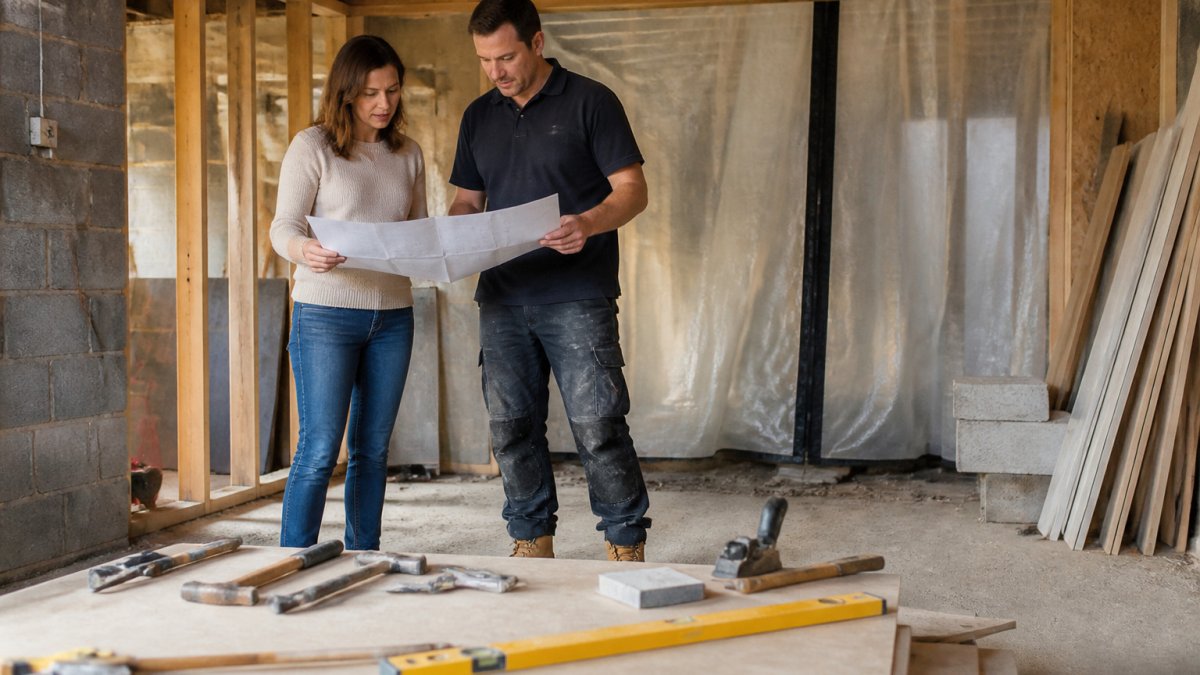
Small daily habits make a real difference to how the build feels. The aim is to contain dust, noise and mess to the work area and keep the rest of the home usable. The most effective approach is to agree who is responsible for each control before work starts, then check that it is actually happening.
Controlling dust, noise and mess
Agree with your builder who owns each of the following controls:
- Daily cleaning: Agree that walkways and shared spaces are cleaned at the end of each day, not just at the end of the job
- Noisy tasks: Fix working hours for the noisiest tasks, such as drilling and cutting, and keep them away from early mornings and evenings where you can
- Materials and skips: Keep skips and materials out of your garden and away from doors and windows where possible, and ask for covers on skips to stop dust blowing
Agree who is responsible for each control. If nobody owns it, it usually does not happen. A common pattern is for the site manager to own containment and daily cleaning, while you own keeping internal doors closed and moving fragile items away from the work area.
Practical checks and escalation
Put a simple routine in place so problems are caught early:
- Daily check: At the end of each day, walk the route from the front door to the work area and note any dust, mess or damage
- Weekly review: Raise any recurring issues at your weekly update call, and agree a fix and a date
- Escalation: If a control is not being maintained, raise it with the site manager first, then with the company director if it is not resolved within an agreed time
Protecting children, pets and remote workers
Each household has different needs, so plan around them:
- Children: Set up a quiet study space away from the site, keep a routine for school runs and meals, and agree a rule that the work area is out of bounds without an adult
- Pets: Keep animals in a room away from open work areas, check that gates and doors stay closed, and ask the site team to keep tools and chemicals out of reach
- Older people: Keep a clear, safe route to the bathroom and main entrance, check that handrails stay in place, and agree a way to raise concerns if noise or access becomes difficult
- Remote workers: Choose a room furthest from the noisiest work, agree quiet hours for calls, and keep a backup plan such as a local co-working space for important meetings
Tell the site team about any vulnerable household members so they can plan around them, and review the arrangements if the work moves to a new area of the house.
Understanding the Home Extension Timeline and Stages
A home extension usually moves through a set of stages. Knowing them helps you predict when the worst disruption will happen. Building work commonly moves through stages such as groundworks, the structural shell and finishing.
Ask your builder for a written programme showing each stage and its likely duration. Timelines shift, so review the plan together at regular intervals. Clear stage dates let you plan when to move belongings, when the kitchen will be available again and when you can return to normal routines.
Booking Your Disruption Plan Review With FMT Construction
A disruption plan works best when it is agreed before the first day on site. If you are planning a home extension in Surrey, FMT Construction can walk you through what to expect, from site access and working hours to dust control and temporary arrangements.
Our team can help you set out a clear plan for your household. Contact FMT Construction to arrange your review.
Frequently Asked Questions
How disruptive is a home extension?
Most home extensions cause noticeable disruption for the whole build, with the heaviest impact during demolition, groundworks and the structural stages. Noise, dust and restricted access to parts of the house are the most common complaints. How much you feel it depends on the scope of the work, whether the extension connects to a kitchen or bathroom, and how well the site is managed. Agreeing a clear plan with your builder before work starts makes the disruption far easier to live with.
Can you live in your house while it is being extended?
In many cases yes, particularly if the extension is to the rear and the kitchen and bathroom remain usable. However, if the work connects to essential rooms or involves major service changes, living in the property can become difficult. Ask your builder to show you which areas will be isolated, when utilities will be interrupted and how long each phase is likely to last, so you can decide whether staying put is realistic for your household.
Should you move out during a home extension?
Moving out is worth considering if the work affects the kitchen, bathroom or main entrance for long periods, or if you have young children, a pet with a sensitive temperament, or someone at home who needs quiet to work. Compare the cost of temporary accommodation against the value of living comfortably through the build. Your builder can advise on which phases are most disruptive so you can time a short move, if you choose one, around the worst weeks.
How can you reduce disruption during building work?
Agree a written disruption plan before work begins, covering working hours, delivery times, site access routes, dust and noise controls and who is responsible for each. Set up a temporary kitchen and a clean route to the bathroom, keep your belongings out of work areas and ask for regular progress updates. A short weekly review with your site manager tends to catch problems early, before they turn into daily frustrations.