
Table of Contents
- Set Clear Expectations Before Work Begins
- Define a Realistic Building Project Timeline
- Establish Construction Project Milestones and Checkpoints
- Request Regular Builder Progress Updates
- Put Timeline Terms in Your Building Contract
- Address Home Renovation Delays Immediately
- Monitor Site Activity and Communication
- Frequently Asked Questions
Last Updated: October 21, 2026
Set Clear Expectations Before Work Begins
The foundation of any successful building project is clarity. Before your builder lifts a hammer, both parties need to understand exactly what will happen, when it will happen, and what success looks like. Vague expectations are where most projects go wrong.
Start by documenting every detail of what you want. This isn't just about aesthetics. Include structural changes, material specifications, colour choices, finishes, and any special requirements. The more specific you are now, the less room there is for misunderstanding later.
Schedule a detailed pre-work meeting with your builder. Walk through the project scope together. Ask questions. Point out anything that seems unclear. A good builder will welcome this conversation because it protects them as much as it protects you.
Discuss site access, parking, waste disposal, and working hours upfront. These logistical details matter more than most homeowners realise. They directly affect how smoothly your project runs and how much disruption your family experiences.
Define a Realistic Building Project Timeline
A realistic timeline is one where builders stick to timelines they can actually achieve. This is where many homeowners and builders part ways. You want the work done quickly. Your builder knows how long it actually takes. The tension between those two positions is where delays happen.
Ask your builder for a detailed breakdown of how long each phase takes. Don't accept vague answers like "about three months." Insist on specifics: demolition (two weeks), structural work (four weeks), electrical and plumbing (three weeks), finishing (two weeks). This granular view reveals where time actually goes.
Compare timelines from multiple builders if you're still deciding. Timelines vary because builders work differently, have different team sizes, and face different constraints. A timeline that seems suspiciously short might mean your builder is overcommitted or inexperienced. A timeline that's unusually long might indicate unnecessary padding.
Allow Contingency Time for the Unexpected
Every building project encounters something unexpected. A structural issue nobody spotted. Delayed material delivery. Weather affecting external work. These aren't failures. They're reality.
Build contingency time into your timeline from the start. A reasonable contingency is 10-20% of your total project duration. If your builder estimates 12 weeks, add 1-2 weeks as buffer. This isn't extra time you're hoping to use. It's time you're planning to need.
Discuss what happens if contingency time gets used. Will the project simply take longer? Will costs increase? Understanding this upfront prevents panic if delays occur. It also helps you plan your family's disruption more realistically.
Establish Construction Project Milestones and Checkpoints
Break your building project timeline into clear milestones. These are the major decision points where work transitions from one phase to the next. Milestones keep both you and your builder accountable.
Typical milestones for a loft conversion or extension include:
- Structural survey complete
- Planning permission approved (if required)
- Building control sign-off on foundations
- Roof structure complete
- First fix electrical and plumbing
- Plastering and finishing begins
- Final inspections and handover
Assign target dates to each milestone. These dates should be realistic but firm. When a milestone is reached on time, it confirms the project is on track. When a milestone slips, it's an early warning sign that the overall timeline is at risk.
Schedule checkpoint meetings at each milestone. These don't need to be lengthy. Fifteen minutes to confirm what's been completed, what's next, and whether anything has changed is enough. These regular touchpoints prevent small issues from becoming big problems.
Request Regular Builder Progress Updates
Silence is dangerous. When you don't hear from your builder, you assume either everything is fine or everything is falling apart. Neither assumption helps you plan.
Establish an update schedule before work begins. Weekly updates are standard for most residential projects. For larger projects, twice-weekly updates might make sense. For smaller jobs, every two weeks could work.
Specify how you want updates delivered. Email works well because it creates a record. A quick phone call is fine too, but follow it up with written confirmation. Video walk-throughs are increasingly common and give you a real sense of progress.
What to Include in Weekly Site Reports
Your builder's weekly report should cover:
- What was completed this week
- What's planned for next week
- Any issues encountered and how they're being addressed
- Whether the project remains on schedule
- Any decisions needed from you
Ask for photographic evidence. A few pictures of completed work sections prove progress happened. They also create a visual record of your project's journey.
Include a simple traffic light system: green (on track), amber (minor delays but recoverable), red (significant delay). This makes it instantly clear whether you need to take action or whether things are proceeding normally.
Put Timeline Terms in Your Building Contract
Your contract is your protection. It should clearly state the agreed timeline, what happens if deadlines slip, and how delays are handled.
Include these contract elements:
- Start date and planned completion date
- Milestone dates with what constitutes completion for each
- Definition of what counts as a delay (typically, missing a milestone by more than a specified number of days)
- Consequences for delays (penalty clauses, extended access, or revised timelines)
- What events qualify as "force majeure" (circumstances beyond anyone's control)
- How changes to scope affect the timeline
- Your right to withhold payment if timelines aren't met
Penalty clauses are worth discussing. Some contracts include daily penalty amounts if the project runs late. These incentivise your builder to stay on schedule. However, ensure the penalty amount is reasonable and that it applies fairly to both parties.
Clarify how changes affect timelines. If you request additional work mid-project, the timeline should extend accordingly. Your contract should specify how much notice your builder needs to adjust schedules when you request changes.
The Law Society guidance on building contracts provides helpful information on what should be included in construction agreements to protect both parties.
Address Home Renovation Delays Immediately
The moment you suspect your project is falling behind, act. Don't wait for the next scheduled update or hope things catch up. Early intervention prevents small delays from becoming catastrophic ones.
Contact your builder as soon as you notice a missed deadline or milestone. Ask directly: "I noticed the structural work was supposed to be complete by Friday. What's the status?" This isn't accusatory. It's a factual question that deserves a factual answer.
Listen to the explanation. Sometimes delays are genuinely unavoidable. Material delivery got held up. Weather prevented external work. A subcontractor cancelled. These things happen. What matters is whether your builder has a plan to recover the lost time.
If the explanation is vague or your builder seems unconcerned about falling behind, that's a red flag. A professional builder takes delays seriously because they affect their reputation and their ability to start their next project on time.
Document everything in writing. After your conversation, send an email summarising what was discussed and what you agreed. This prevents misunderstandings about what was promised and when.
Monitor Site Activity and Communication
Presence matters. Your builder should be on-site regularly and accessible. You should see consistent activity and clear progress.
Visit the site yourself during working hours. Don't be intrusive, but do observe what's happening. Are workers there? Are they actively working or standing around? Is equipment being used? Is progress visible compared to last week?
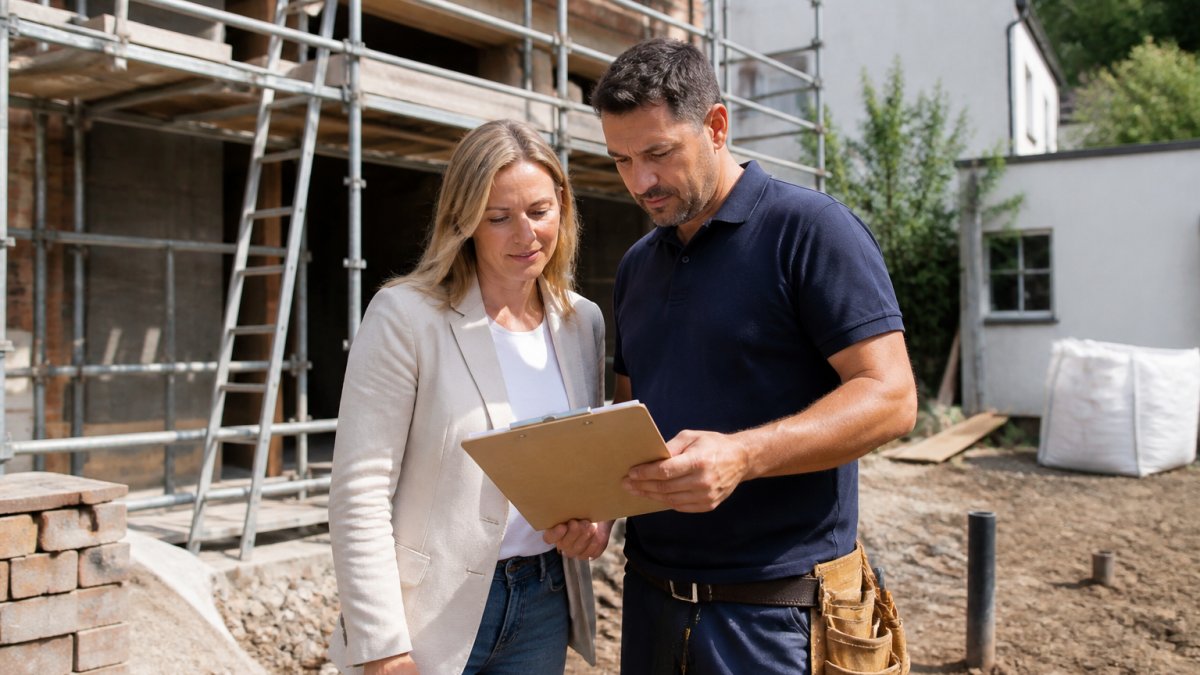
Keep communication channels open. Your builder should respond to messages within 24 hours, ideally within a few hours. If you're waiting days for replies to simple questions, they're either too busy (which means your project isn't a priority) or disorganised (which predicts problems).
Establish a single point of contact. If your builder is a company, assign one person as your main contact. This prevents contradictory information and ensures consistency. You shouldn't have to repeat yourself to different team members.
Trust your instincts. If something feels off about the pace of work, the quality of communication, or the professionalism of the team, it probably is. Your gut reaction to how a builder operates is often accurate.
Consistent communication and transparent progress tracking are what separate projects that finish on time from those that drag on. Homeowners who stay engaged and builders who keep clients informed achieve better outcomes.
Ensuring builders stick to timelines requires clear expectations, realistic planning, detailed contracts, and active monitoring. Start with crystal clarity about what you want and when. Break the project into milestones with specific dates. Insist on regular progress updates. Document everything in writing. Address delays immediately when they appear.
The builders that deliver on time aren't necessarily faster than others. They're the ones who plan carefully, communicate consistently, and take delays seriously. When you hold your builder accountable to these standards from day one, you dramatically increase the chances your project finishes when promised.
For homeowners planning a significant renovation or extension, working with experienced builders who understand how to manage timelines and communicate progress makes all the difference. At FMT Construction, we have over 35 years of practical experience delivering bespoke residential projects. We treat timeline management as a core part of our service. The Royal Institution of Chartered Surveyors guidance on project management offers additional resources on managing construction projects effectively.
If you're planning a loft conversion, extension, or structural alteration and want builders who understand how to stick to timelines, get in touch. We'll walk you through exactly how we manage projects, what you can expect week to week, and how we keep you informed every step of the way.
Frequently Asked Questions
How can I make sure my builder sticks to the agreed timeline?
Include specific completion dates and milestone deadlines in your written contract, with clear consequences for delays. Request weekly builder progress updates in writing, establish regular site inspections, and hold fortnightly progress meetings. Document everything in writing, track work against your construction project milestones, and address any slippage within days, not weeks. A builder who knows you're actively monitoring and have contractual protections in place is far more likely to maintain focus on your building project timeline.
What should a building project timeline include?
A robust timeline specifies start and completion dates, major construction project milestones (foundation, structural work, first fix, second fix, final inspection), task dependencies, and contingency buffers. Include weather-dependent activities, material delivery schedules, and inspection points. Break the work into phases so progress is measurable. For complex projects like loft conversions, identify which tasks cannot run in parallel. Clearly state who is responsible for obtaining Building Regulations approval and when inspections must occur. This prevents vague expectations and gives both you and your builder a shared roadmap.
How often should a builder provide progress updates?
Weekly written updates are the standard for residential projects. These should cover work completed that week, upcoming tasks, any issues encountered, and whether you remain on schedule. For larger projects, fortnightly site meetings with the builder allow you to discuss progress in person and address home renovation delays before they compound. Daily site visits by you are not practical, but spot checks every few days let you verify work quality and pace. Require updates in writing so you have a record; verbal assurances alone leave no accountability trail.
What should I do if my builder is falling behind schedule?
Act within days, not weeks. Request an immediate written explanation of the delay and a revised timeline showing how they will recover lost time. If delays stem from material shortages or weather, accept reasonable adjustments; if they stem from poor planning or underestimating labour, push back. Review your contract for delay clauses and penalties. If the builder cannot demonstrate a credible recovery plan or continues to slip, you may need to escalate formally in writing, referencing your contract terms. Early intervention prevents a four-month job from becoming seven months.