Table of Contents
- Why Comparing High-End Quotes Matters More Than Price Alone
- What Should a Renovation Quote Include
- Builder Quote Exclusions and Provisional Sums Explained
- Creating a Renovation Quote Comparison Checklist
- Questions to Ask a Builder Before Accepting a Quote
- How to Spot Hidden Costs and Vague Language
- Comparing Quality and Credentials, Not Just Price
- Frequently Asked Questions
Last Updated: 11 October 2026
Why Comparing High-End Quotes Matters More Than Price Alone
When you're planning a significant renovation, the temptation is simple: pick the lowest quote and move forward. The problem is that how to compare high-end quotes properly goes far beyond looking at the bottom line. A quote that seems cheap often hides structural surprises, material shortcuts, or timeline risks that cost far more in the long run.
High-end renovation work requires understanding what you're really paying for.
The real challenge isn't finding quotes, it's reading them. Most quotes are dense documents filled with exclusions, provisional sums, and vague descriptions that make genuine comparison nearly impossible. You need a systematic approach to standardise the data, spot hidden costs, and separate quality builders from those simply undercutting the market.
What Should a Renovation Quote Include
A proper renovation quote is far more than a number. It's a detailed contract that outlines exactly what work will happen, what materials will be used, how long it will take, and what happens if circumstances change. Understanding these components is essential when you're trying to compare high-end quotes fairly.
Labour costs and timescales
Labour costs should be broken down by trade and phase. A good quote separates structural work, electrical, plumbing, joinery, and finishing, with a timeline for each. This transparency matters because it shows the builder understands the sequence of work and has thought through dependencies.
The timeline itself tells you a lot. Unrealistic schedules suggest the builder hasn't properly scoped the work or is planning to cut corners to meet deadlines. For a loft conversion, for instance, structural work, building control inspections, and weather dependencies all need realistic allowances. A quote that promises completion in three months when eight is standard should raise questions.
Labour costs also reveal experience levels. Specialists command higher day rates, but they work faster and produce better results. A quote that seems low on labour often means less experienced staff or inadequate time allocation for quality finishes.
Materials and specifications
This section should list every material by brand, grade, and finish. Vague descriptions like "quality kitchen units" or "standard tiles" are red flags. A proper specification says "Caple integrated dishwasher, stainless steel" or "Porcelanosa rectified porcelain tiles, 600×600mm, matt finish."
Material costs vary significantly. A high-end quote will specify premium suppliers and finishes because that's what the client expects. A suspiciously low quote might use budget alternatives without clearly stating the substitution. When comparing quotes, identical specifications mean you can directly compare labour efficiency and profit margins.
Site management and contingencies
Contingency sums are crucial in renovation work. Structural surveys can't predict everything, old properties hide surprises. A contingency of 10-15% is standard for renovation projects, allocated specifically for unforeseen issues like asbestos, hidden rot, or structural weaknesses discovered during work.
Site management covers daily operations: site security, waste removal, temporary facilities, and dust control. High-end projects require more rigorous site management to minimise disruption to your home and neighbourhood. A quote that omits or underestimates this suggests the builder hasn't properly planned the logistics.
Builder Quote Exclusions and Provisional Sums Explained
This is where many homeowners get caught out. Exclusions are what the quote deliberately doesn't cover. Provisional sums are estimates for work that can't be priced precisely until the job starts. Understanding the difference between them is critical when you compare high-end quotes.
Exclusions are straightforward: the quote explicitly states what's not included. Common exclusions might be structural engineer fees, building control inspections, or site archaeology. These aren't hidden, they're listed. You need to account for them separately and add them to the total cost.
Provisional sums are more subtle. They're placeholder amounts for work that's likely but uncertain. If structural work might reveal hidden rot, the quote might include a provisional sum of £5,000 for remedial timber work. When the work starts and the extent becomes clear, the provisional sum adjusts upward or downward. A builder who underestimates provisional sums is either inexperienced or banking on variations later.
When you compare high-end quotes, list all exclusions and provisional sums side by side. A quote with minimal contingencies and exclusions might seem cheaper but actually represents higher risk. The builder is either underestimating the work or planning to charge you later for items they should have anticipated.
Creating a Renovation Quote Comparison Checklist
Systematic comparison prevents costly mistakes. Use a structured checklist to evaluate each quote fairly and identify where differences actually lie.
Standardising the data
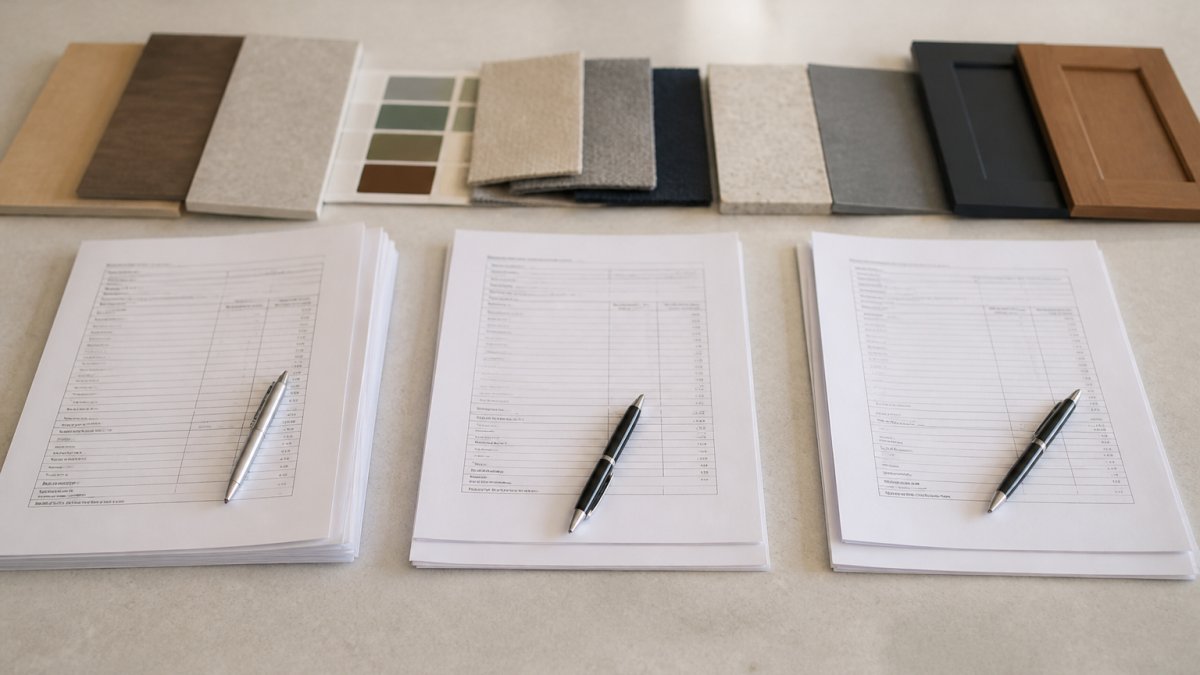
Start by extracting key figures from each quote: total cost, labour cost, material cost, timescale, contingency percentage, and any exclusions or provisional sums. Create a simple spreadsheet with these rows so you can see them side by side. This immediately reveals which quotes are outliers and why.
Next, list the scope of work from each quote. Does every quote include the same tasks? A quote that seems cheaper might exclude painting, flooring, or electrical work that another includes. Standardise the scope by ensuring every quote covers identical deliverables, or explicitly note the differences.
Check the specifications line by line. Are material grades, brands, and finishes the same? Are labour rates calculated the same way? A quote that specifies budget-grade materials will naturally cost less than one specifying premium finishes. Once you've standardised these details, cost differences become meaningful.
Identifying variations in scope
After standardisation, variations that remain are genuine differences in approach or efficiency. A builder who quotes lower labour costs might have a more simplified process, better relationships with suppliers, or simply lower overheads. That's legitimate. A builder who quotes higher labour costs might be allocating more time for quality or using more experienced staff.
Some variations reflect genuine disagreement about how the work should be done. One builder might propose a particular structural solution that another builder would approach differently. These aren't better or worse, they're different, and they may carry different costs and timelines. Understanding why variations exist helps you make an informed choice rather than just picking the cheapest option.
Questions to Ask a Builder Before Accepting a Quote
Before committing, ask direct questions that reveal how thoroughly the builder has thought through your project.
Understanding the timeline and disruption
Ask the builder to walk you through the schedule week by week. How long for each phase? What determines the sequence? Where are dependencies that could cause delays? A builder who can answer these questions in detail has genuinely planned the work.
Ask about site disruption. Where will their team park? How will they manage waste removal? What hours will they work? Will you have access to your kitchen during renovation? These practical details matter enormously to your daily life, and they reveal whether the builder has managed similar projects before.
Ask what happens if the timeline slips. Is there a penalty for delay? What causes are beyond their control? What contingencies do they have if a trade is delayed or materials don't arrive on schedule?
Clarifying structural and unforeseen issues
Ask how the builder handles discovery of unexpected problems. Is there a process for assessing the issue, getting your approval, and pricing the remedial work? Do they have a preferred structural engineer or surveyor, or will you choose one? Who pays for the assessment?
Ask about their experience with properties like yours. If you have a Victorian property with original features, do they understand the specific challenges? Have they worked on similar buildings in your area? Local knowledge matters, building regulations, ground conditions, and typical construction methods vary.
Ask for examples of previous projects that encountered unforeseen issues and how they were handled. This reveals whether the builder can problem-solve or tends to blame the client for surprises.
How to Spot Hidden Costs and Vague Language
Vague language in quotes is often deliberate. Builders who know they'll encounter issues sometimes use broad descriptions to avoid committing to specifics, then charge change orders later.
Watch for phrases like "as required," "to be confirmed," or "subject to site conditions." These are escape clauses. A proper quote specifies what will be done, not what might be done depending on circumstances. If the quote says "structural repairs as required," ask for a detailed schedule of what repairs are anticipated and what the provisional sum covers.
Look for missing line items. A quote for a loft conversion should include structural steelwork, building control fees, insulation, electrical rewiring, plumbing, and finishing. If major elements are missing or lumped into vague categories, the quote is incomplete. That's not necessarily the builder's fault, sometimes the scope is genuinely unclear, but it means you can't compare quotes fairly yet.
Check whether the quote includes all statutory work. Building control inspections, structural engineer certification, and asbestos surveys (if applicable) must be included or clearly excluded. Some builders assume clients will arrange these; others include them. This difference affects both cost and timeline.
Watch for quotes that are suspiciously low. If one builder quotes significantly less than others for identical work, ask why. Sometimes it's efficiency. Often it's because they've misunderstood the scope, underestimated the work, or plan to use cheaper materials than you expect. Get clarification in writing before you commit.

Comparing Quality and Credentials, Not Just Price
Once you've standardised the quotes and understood what each covers, you need to assess the builder's ability to deliver. Price alone doesn't determine value.
Check credentials. Are they registered with a professional body? Do they have relevant insurance? Ask for references from recent clients and actually contact them. Ask specific questions: Did the work finish on time? Were there unexpected costs? Would they hire this builder again?
Visit completed projects if possible. Look at the quality of finishes, how details are handled, and how the site was managed during work. Quality is visible, poor workmanship shows in uneven tiling, gaps in joinery, or sloppy finishing.
Ask about guarantees. A reputable builder guarantees their work for a defined period. What does the guarantee cover? How long does it last? What's the process for claiming it? A builder who won't guarantee their work is a red flag.
Experience matters. When you compare high-end quotes, experience and track record are part of what you're paying for.
Comparing high-end renovation quotes properly takes time, but it's time well spent. A systematic approach reveals not just the lowest price but the best value. When you've standardised your quotes, understood what's included and excluded, and assessed the builder's credentials, you can make a confident decision.
Frequently Asked Questions
Why do renovation quotes vary so much between builders?
Quotes differ because builders interpret specifications differently, use different suppliers, include varying contingencies, and factor in different levels of site management. A lower quote might exclude costs that a higher quote includes, like structural investigation, provisional sums for unforeseen issues, or project management fees. When comparing high-end quotes, these differences compound. Always ask what each builder has and hasn't included before assuming one is overpriced.
What should a renovation quote comparison checklist cover?
Your checklist should include labour costs, material specifications and suppliers, timescale and completion dates, provisional sums for unforeseen work, site management and waste removal, Building Regulations approval and certification, guarantees and aftercare, payment schedule, and exclusions. Standardising these items across all quotes lets you compare apples to apples. Without this structure, you'll miss hidden costs or scope differences that only become obvious once work starts.
What are provisional sums in a renovation quote, and why do they matter?
Provisional sums are estimates for work that cannot be priced accurately until the project begins, typically structural repairs, asbestos removal, or unforeseen damage discovered during demolition. They protect both you and the builder: if the actual cost is lower, you pay less; if it's higher, you understand why. Without clear provisional sums, you risk unexpected bills mid-project. Always ask your builder how provisional sums are managed and what triggers additional costs.
Should I choose the cheapest quote for a high-end renovation?
No. The lowest quote often reflects corners cut, lower-quality materials, or missing scope items that will cost you more later. High-end renovations demand experienced builders, quality finishes, and rigorous project management. Comparing quotes means evaluating what you're actually getting: credentials, guarantees, site management, and the builder's track record with similar projects. Price is one factor; value, quality, timeline certainty, and peace of mind, matters far more.